
Blackmagic Camera 10.2.2 Released – Cinema Camera 6K Gains Phase Detect Autofocus, Cloud Streaming, and 10-Minute Pre-Record
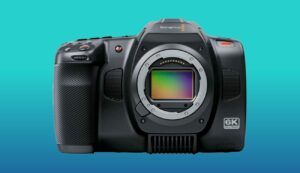
Blackmagic Design released Camera 10.2.2 on August 10, 2026, delivering phase-detect autofocus to the Cinema Camera 6K — a camera whose full-frame sensor has carried the hardware necessary for modern AF since its IBC 2023 debut, waiting on a firmware implementation that finally arrived today at no cost to owners. The same update bundles 10-minute pre-record, Blackmagic Cloud stream routing, and four-channel audio recording — features that previously required owning the more expensive PYXIS 6K — completing a feature parity catch-up in a single firmware update.
Why Phase-Detect Autofocus Took Three Years to Arrive
The Cinema Camera 6K’s autofocus limitation was never a hardware problem. Every Cinema Camera 6K shipped since September 2023 contains a full-frame 6K Bayer sensor with phase-detect pixels already embedded in its imaging array, per the camera’s official specifications. What it lacked — until today — was the firmware implementation that reads those pixels, computes the phase difference, and translates that calculation into motor commands the lens can act on.
Phase-detect autofocus works fundamentally differently from the contrast-detection approach Blackmagic cameras used previously. Contrast detection measures sharpness in the image as the lens moves, scanning for the peak of a contrast curve — a process that requires the lens to move first to gather information, producing the characteristic hunting behavior that made the Cinema Camera 6K’s autofocus a manual-focus tool in practice. Phase detection, by contrast, reads split-aperture pixel pairs that receive light from slightly different angles of the lens opening. The lateral displacement between those two readings — the phase difference — tells the processor both the direction the lens needs to move and the distance, before the lens moves at all. One-shot acquisition replaces the iterative hunt. The result is the snappy, confident autofocus behavior that Sony, Canon, and Nikon mirrorless bodies have offered for years.
Developing that firmware pipeline for the L-Mount, tuning it for continuous tracking and face detection modes, and validating it against the Cinema Camera 6K’s specific sensor and processing architecture is non-trivial engineering work. Blackmagic Design’s Technical Sales Director Craig Heffernan confirmed to CineD at NAB 2025 that both the Cinema Camera 6K and the PYXIS 6K share the same full-frame 6K Bayer sensor, which is why the implementation could eventually transfer between them — but also why Blackmagic ran the development on one body at a time rather than simultaneously. The full development arc is detailed in CineD’s coverage of Camera 10.2.2.
From PYXIS 6K First, Cinema Camera 6K Second: A Staged Rollout
Blackmagic first demonstrated PDAF on the Cinema Camera 6K in test firmware builds around NAB 2025. The PYXIS 6K then received a dedicated autofocus test build in March 2026, and that implementation graduated to official supported firmware with the Camera 10.2 release in June. Camera 10.2.2 brings the same implementation to the Cinema Camera 6K in August.
That sequence has an important implication for Cinema Camera 6K owners: the PDAF system that arrived in today’s update is not a beta or a first-generation implementation. Blackmagic developed and field-tested it on the PYXIS 6K across the test build period and the two months since Camera 10.2’s release before delivering it to the Cinema Camera 6K in stable firmware. Owners who were understandably reluctant to run experimental builds on paid productions now have a production-validated implementation as their first official experience of the feature.
Camera 10.2.2 adds seven autofocus-related capabilities to the Cinema Camera 6K: PDAF support, continuous autofocus, face detection, object detection, autofocus transition speed control, shortcut-key assignment for AF mode toggling, and the ability to temporarily pause continuous autofocus by holding the focus button, per the official Newsshooter changelog. The transition speed control is a workflow detail worth noting — it lets operators choose how quickly the camera racks between focus targets, keeping pulls cinematic rather than abrupt.
Pre-Record Makes Ten Minutes of History Saveable
The second-most-significant addition in Camera 10.2.2 is extended pre-record functionality, adjustable from five to ten minutes. The Cinema Camera 6K continuously records footage into a rolling buffer; when the operator presses record, the selected pre-roll duration is automatically prepended to the new clip. Only the chosen buffer window is retained, which also reduces media consumption compared to rolling continuously.
This capability has been available on the URSA Broadcast G2 and both PYXIS models since the Camera 10.0 update in December 2025. Its arrival on the Cinema Camera 6K extends it to one of Blackmagic’s most widely adopted cinema camera bodies — one whose natural use cases in documentary, news, and live-event work are precisely the situations where the decisive moment rarely announces its approach. A wedding ceremony, a protest, a wildlife encounter, an unrepeatable interview moment: all of these are scenarios where an operator who was not already rolling loses footage that cannot be recovered. Pre-record eliminates that category of loss.
Read more: Blackmagic Design Debuts the Cinema Camera 6K—A Full-Frame Powerful Contender with L-Mount Lens
Cloud Routing and Four Audio Channels
Camera 10.2.2 also adds Blackmagic Cloud stream routing to the Cinema Camera 6K, enabling the camera to route a live output directly into a studio pipeline or to multiple streaming platforms simultaneously through Blackmagic’s cloud infrastructure — without additional hardware between the camera and the destination. This matches the capability the PYXIS 6K gained in June. For solo operators and small crews already embedded in the Blackmagic ecosystem, a cinema camera that records internal BRAW for offline color grading can now also serve as a live streaming source the same day.
Four-channel audio recording — doubling the Cinema Camera 6K’s previous track count — rounds out the update. All four channels record in sync within a single video file, positioned by Blackmagic for interviews, documentary, and live event production where independent tracks for talent microphones, boom audio, ambient room sound, and safety recordings can coexist in one BRAW clip. This simplifies both on-set monitoring and the handoff to post-production.
Firmware-as-Product: What This Update Signals
Taken together, Camera 10.2.2 transforms the Cinema Camera 6K from a technically strong but manually intensive cinema tool into a considerably more versatile production camera — without any change to the hardware that owners already paid for in 2023, 2024, or 2025. The camera now matches the PYXIS 6K’s software feature set in all the areas that matter most for single-operator and small-crew production.
The broader context matters here: Sony, Canon, DJI, and most other camera manufacturers have increasingly treated post-launch firmware as a competitive tool, delivering capability expansions that affect purchase decisions long after the original sale. Blackmagic’s track record — Camera 10.0 in December 2025 adding pre-record and four-channel audio, Camera 10.2 in June 2026 adding PDAF to the PYXIS, Camera 10.2.1 in July 2026 addressing URSA Broadcast G2 codec reliability, and now Camera 10.2.2 bringing everything to the Cinema Camera 6K — demonstrates a sustained software development cadence that changes the calculus for buyers deciding between a camera with strong day-one specifications and one with a strong ongoing development commitment.
Cinema Camera 6K owners who have been waiting for PDAF since the camera launched now have it. Blackmagic Camera 10.2.2 is available now as a free download from Blackmagic Design.
Frequently Asked Questions
Does the Blackmagic Cinema Camera 6K now have the same autofocus as Sony or Canon mirrorless cameras?
Camera 10.2.2 adds the same foundational autofocus technology — phase-detect pixels embedded in the imaging sensor — that Sony, Canon, and Nikon have used for years in their mirrorless bodies. The Cinema Camera 6K now offers continuous autofocus, face tracking, and object tracking, with adjustable transition speed. Blackmagic has not published independent side-by-side performance benchmarks against Sony or Canon implementations, and real-world AF performance varies by subject, lighting, and lens. What can be said is that PDAF is structurally superior to the contrast-detection approach the Cinema Camera 6K previously relied on: it acquires focus without the hunting behavior that made prior Blackmagic autofocus a tap-to-focus system in practice. Whether it matches the consistency of Sony’s best AF implementations will become clearer as real-world footage appears from Camera 10.2.2.
Why didn’t the Cinema Camera 6K have phase-detect autofocus when it launched in 2023 if the sensor already supported it?
The sensor has always had phase-detect pixels. What was absent was the firmware implementation — the software pipeline that reads those pixels, computes the phase difference, translates that into lens motor commands, and does so reliably across continuous tracking, face detection, and object detection modes. Developing and validating that pipeline for the L-Mount and the Cinema Camera 6K’s specific processing architecture took time. Blackmagic showed the feature in test builds at NAB 2025, developed it further through the PYXIS 6K test build in March 2026 and the Camera 10.2 official release in June, and delivered the validated result to Cinema Camera 6K owners in August.
What is pre-record, and how does it help on a cinema camera?
Pre-record maintains a continuous rolling buffer — in this case up to ten minutes of footage — that runs in the background even when the camera is not officially in record mode. When you press record, the footage from your chosen pre-roll window is automatically attached to the beginning of your clip. For documentary, news, wildlife, and live event work, this eliminates the category of missed footage that occurs when significant action begins before an operator can react to trigger recording. The Cinema Camera 6K’s CFexpress and SSD media have sufficient sustained write speeds to maintain a ten-minute pre-record buffer of 6K BRAW data reliably.
Does Camera 10.2.2 affect any other Blackmagic cameras besides the Cinema Camera 6K?
Based on the Newsshooter 10.2.2 changelog, Camera 10.2.2 applies specifically to the Cinema Camera 6K. Owners of the PYXIS 6K received phase-detect autofocus and cloud stream routing with Camera 10.2 in June 2026. URSA Broadcast G2 owners received H.265 and H.264 codec improvements with Camera 10.2.1 in July 2026. Each recent point release has targeted a specific camera body, and 10.2.2 belongs to Cinema Camera 6K owners.